Every bookable experience in Italy, in one place — compared across GetYourGuide, Headout and Viator, ranked on reviews, booked on their site at their price.
Discover Pompeii on a private tour, enhanced with wine tasting and a typical lunch on the slopes of Mount Vesuvius. Explore ancient ruins, streets, baths, and the Roman Theatre with an expert guide. Choose the Premium or Premium Plus option for a more in-depth experience.
Highlights
Private Pompeii Tour
Wine Tasting & Lunch on Vesuvius
Skip-the-Line & Transport
What's included
Blue Badge guide
Lunch
Hotel/port pickup and drop-off
Transport by private vehicle
Pompeii Express skip-the-line tickets
Itinerary
1
Archaeological Park of Pompeii
2h
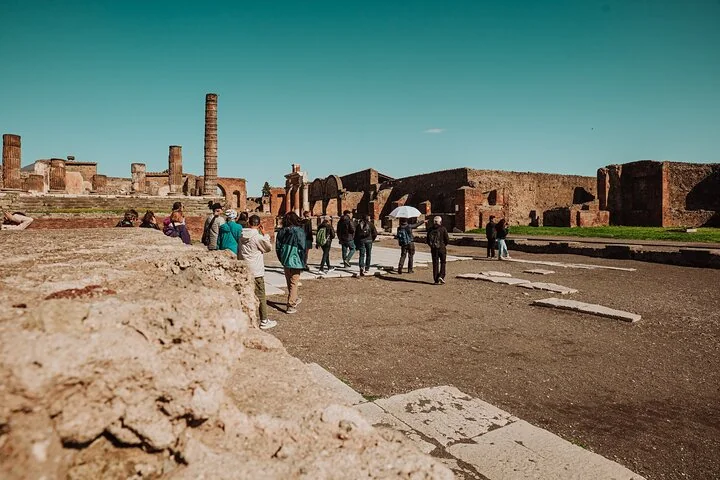
Your private certified guide will show you the wonders of Pompeii. Pompeii is larger and better preserved than most people expect. You will visit the highlights: the Forum, the plaster casts of the victims, the private homes, the shops, the Bath-House, the theater, the brother, etc...
The walking tour is at your own pace, let us know would there be any special request or need.
You will see the beautiful floor mosaics and wall-paintings. You will learn how advanced Romans were 2000 years ago. Your guide will introduce you to daily life in Pompeii. You will learn about the eruption of Mount Vesuvius and see the ash and pumice rock that buried Pompeii.
2
Stop 2
5min
Porta Marina was one of the main gates of ancient Pompeii and the point where many travelers first entered the city. Located near the port area, it connects to the city’s defensive walls and shows how Pompeii controlled access and protected itself. Through this gate you can still walk along the original stone ramp and see the impressive fortifications that once welcomed merchants, sailors, and visitors arriving from the Bay of Naples.
3
Stop 3
5min
The Basilica is the most imposing and important public building in Pompeii, located in the southwestern corner of the Forum. Dating back to the 2nd century BC, it is one of the oldest examples of its kind in the Roman world.
4
Temple of Apollo
5min
The Temple of Apollo is one of the oldest and most important religious sites in Pompeii, dedicated to Apollo, the god of the sun, music, and prophecy. Set in a large open courtyard near the Forum, it once featured elegant columns and statues, including a famous bronze of Apollo aiming his bow. From here, worshippers could make offerings and seek guidance from the god, making the temple a central part of Pompeii’s spiritual life.
5
Stop 5
10min
Pompeii’s Forum offers visitors a direct encounter with the city’s civic heart. From the modern walkways and terraces surrounding the square, you can observe the spatial arrangement of temples, administrative buildings, and market structures that once framed public life. This elevated perspective makes it easier to understand how politics, religion, and commerce intersected in a single monumental space. With the ruins of the Capitolium, Basilica, and Macellum all in view, the Forum reveals itself as a bustling stage where announcements were made, deals were brokered, and festivals unfolded at the foot of Mount Vesuvius.
6
Macellum
5min
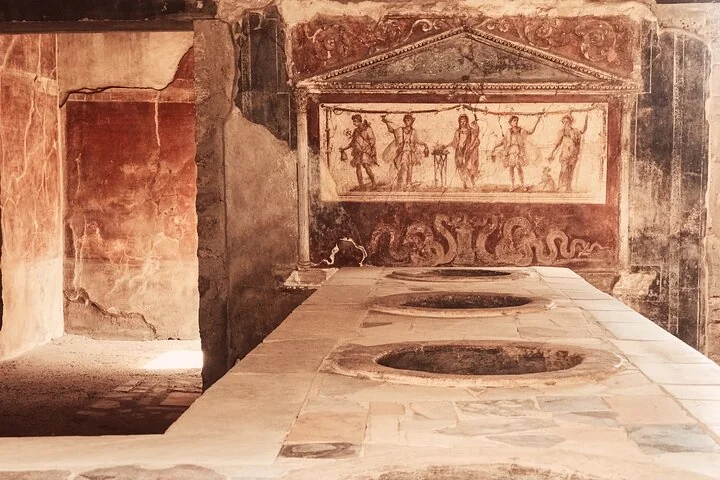
The Macellum was Pompeii’s main food market, a covered complex where vendors sold fish, meat, fruit, and imported delicacies. Its layout of stalls, storerooms, and a central shrine illustrates the organization of Roman commerce and the importance of food supply in urban life. Excavated counters, marble tables, and decorative elements still evoke the lively bustle of shoppers and traders that once filled the market each morning.
7
Terme del Foro
10min
The Forum Baths were among the most elegant public bath complexes in Pompeii, serving as a social and recreational hub for citizens. Divided into men’s and women’s sections, the complex included changing rooms, warm and hot bathing halls, and a cold plunge pool, all heated by an advanced hypocaust system. Remarkably preserved stucco reliefs and vaulted ceilings still convey the refined atmosphere that once made bathing a daily ritual of hygiene, leisure, and conversation.
8
Casa dei Vettii
10min
The House of the Vettii is one of Pompeii’s finest aristocratic residences, renowned for its richly decorated frescoes and elegant architectural layout. Built around spacious atria and peristyle gardens, it reflects the lifestyle and aspirations of wealthy merchant owners in the 1st century AD. Mythological paintings, ornamental motifs, and refined domestic spaces offer a vivid glimpse into elite taste and the artistic culture of the Roman home.
9
Stop 9
10min
The Insula dei Casti Amanti is a residential and commercial block named after a vivid fresco showing a pair of lovers sharing an affectionate moment. Today visitors access the site via elevated ramps that allow a clear, panoramic view into the workshops, storerooms, and domestic rooms below, without disturbing the fragile archaeological surfaces. From this perspective, it becomes easy to picture craftsmen at work and families moving between spaces, as trade and home life were closely intertwined in Pompeii. The preserved frescoes, painted signs, and half-finished renovations reveal a neighborhood caught in the midst of its daily routine at the moment of the eruption in AD 79, offering rare insight into the city’s urban fabric and the social world of its working inhabitants.
10
Teatro Grande
5min
The Teatro Grande invites visitors to step into the world of Roman drama and public entertainment. From the upper terraces, which are now accessed by modern walkways, you can look down onto the sweeping semicircular seating tiers, the stage building, and the orchestra area where musicians and dancers once performed. The theatre’s excellent acoustics and commanding views toward the city and Mount Vesuvius help convey why performances here drew large crowds for comedies, tragedies, and public ceremonies. Standing within the auditorium, it is easy to imagine the applause, costumes, and festive atmosphere that made theatre-going a shared cultural experience in Pompeii.
11
Villa dei Misteri
Before you go
Ticket & redemption
Mobile or paper ticket accepted
One ticket covers the whole booking
Pickup & drop-off
We operate pick up in Naples, Sorrento, Pompeii etc... from hotels, vacation rentals, train station, airport and cruise terminal/port. Please specify your pick-up place upon booking.
Good to know
Public transportation options are available nearby
Not recommended for travelers with spinal injuries
Not recommended for travelers with poor cardiovascular health
Travelers should have at least a moderate level of physical fitness
Wear appropriate shoes. Sun gears from May to September
Please indicate all the participants full names which are required for the tickets
Accessibility
Service animals allowed
Specialized infant seats are available
Location
Via Plinio, 26, 80045, Italy
30min
Available just in the Premium Plus Option.
The Villa of the Mysteries is one of Pompeii’s most renowned sites, famous for its remarkably well-preserved frescoes depicting a mysterious Dionysian ritual. Located just outside the ancient city walls, this elegant Roman villa offers a rare insight into ancient beliefs and daily life. The visit is included exclusively with the Premium Plus option, which features an extended 3-hour private guided tour of Pompeii, allowing guests to explore this iconic site with expert insight and at a relaxed pace.
12
Stop 12
10min
The Antiquarium of Pompeii serves as the gateway to understanding the city before exploring its streets. Visitors move through well-organized galleries displaying statues, household objects, inscriptions, jewelry, and other artifacts recovered during excavations. From elevated platforms and glass cases, you can examine delicate items that would not survive in the open site, while panels and reconstructions provide context on daily life, religion, and the eruption of AD 79. The final rooms present plaster casts of victims and dramatic eruption material, offering a powerful and emotional frame through which to view the ruins that await outside.
13
Parco Nazionale Del Vesuvio
Pass by
While this tour does not include a climb to Mount Vesuvius, travelers will enjoy stunning views of the iconic volcano throughout their visit. As you explore the ancient streets of Pompeii and later travel to the slopes of Vesuvius for a wine tasting and light lunch at Russo Family Winery, you can admire the majestic volcanic landscape and its dramatic presence over the Bay of Naples. This scenic backdrop enhances the experience, connecting history, culture, and the unique terroir of the region.
14
Stop 14
2h
Russo Family Winery – Cantina del Vesuvio is a charming family-run winery on the slopes of Mount Vesuvius, overlooking the Bay of Naples. Renowned for its Lacrima Christi wines, the winery offers a true taste of local culture and flavors.
Visitors will enjoy:
Guided tour of the vineyard and cellar
Tasting of 5 wines, classic or superior
3-course lunch using traditional local ingredients
Lunch includes: appetizer with salami, cheeses (provolone and ricotta), casatiello, roasted eggplant, and bruschetta with Piennolo tomatoes; pasta with Piennolo cherry tomatoes and basil; dessert: Neapolitan Pastiera with ricotta, cooked wheat, and candied fruit.
Vegetarian, vegan, and gluten-free options available.

 Skip the line
 Skip the line
 Skip the line
 Skip the line
 Skip the line
 Skip the line

 Special offer